Motors Media Group Auto Why Modern Vehicles Depend More on Software Than Mechanics

Why Modern Vehicles Depend More on Software Than Mechanics

Modern vehicles are no longer purely mechanical machines. For decades, cars relied mainly on physical components such as engines, gears, and hydraulic systems. While these parts still play an important role, software now controls many essential functions. Advances in computing technology have changed how vehicles operate. Electronic systems monitor performance, adjust driving conditions, and support safety features. Many of these tasks happen automatically through onboard software programs. This shift has transformed the automotive industry. Engineers now combine traditional mechanical design with complex digital systems. As a result, vehicles have become more efficient, responsive, and intelligent.

The Rise of Electronic Control Systems

Electronic control units are at the center of modern automotive software. These small computers manage different systems throughout the vehicle. A single car may contain dozens of them. Each control unit focuses on a specific function. One may regulate engine performance, while another handles braking or steering assistance. These systems communicate with each other through internal networks. Sensors provide real-time information about speed, temperature, pressure, and other conditions. The control units analyze this data and make adjustments within milliseconds. For example, software can regulate fuel injection to improve efficiency. It can also adjust engine timing to reduce emissions.

Advanced Safety and Driver Assistance

man

Safety technology has advanced significantly in modern vehicles. Many safety features depend heavily on software systems. Driver assistance technologies rely on cameras, radar, and sensors. These devices collect environmental data around the vehicle. Software then processes this information to support safe driving decisions. Systems such as automatic emergency braking analyze the distance between vehicles. If a collision risk is detected, the system can apply the brakes quickly. Lane-keeping assistance works in a similar way. Cameras monitor road markings, and software gently adjusts steering to help maintain lane position. These systems react faster than human reflexes in many situations. By continuously monitoring the driving environment, software helps reduce the likelihood of accidents.

Engine Efficiency and Environmental Control

Software also plays a key role in improving fuel efficiency and reducing emissions. Modern engines depend on digital management systems that monitor combustion and fuel delivery. Sensors track variables such as oxygen levels, air intake, and engine temperature. The software analyzes this data and adjusts engine operation accordingly. This level of control was difficult to achieve with purely mechanical systems. Software can make rapid adjustments to maintain efficient combustion under different driving conditions. Environmental regulations have encouraged this technological shift. Automakers use software to ensure vehicles meet strict emissions standards. These digital systems help maintain engine performance while reducing environmental impact. The combination of mechanical engineering and software design creates more efficient vehicles overall.

Connectivity and Vehicle Communication

Modern vehicles are increasingly connected to digital networks. Software allows cars to communicate with smartphones, navigation systems, and cloud services. Infotainment systems rely heavily on software platforms. Drivers can access navigation, music streaming, and communication tools directly through the vehicle interface. Some vehicles also receive over-the-air software updates. These updates improve system performance or add new features without requiring a visit to a service center. Connectivity extends beyond entertainment. Navigation systems use real-time traffic data to suggest efficient routes. Software integration creates a driving experience that is more interactive and responsive. The vehicle becomes part of a broader digital ecosystem.

Software in Electric and Hybrid Vehicles

Electric and hybrid vehicles depend heavily on software for power management. Unlike traditional engines, electric powertrains require precise control of battery systems and energy flow. Software regulates battery charging, temperature control, and power distribution between components. These systems help maintain battery efficiency and extend driving range. Regenerative braking provides another example. When the vehicle slows down, the software directs the electric motor to convert kinetic energy back into stored battery power. Managing these processes requires constant monitoring and adjustment. Digital systems allow electric vehicles to operate smoothly while maximizing energy use.

The Future of Automotive Technology

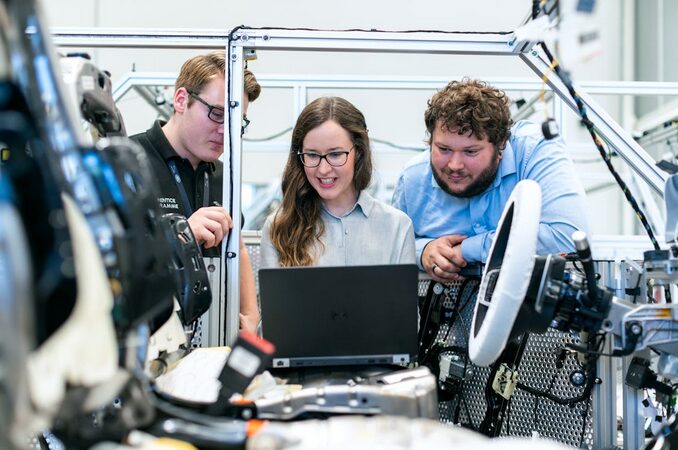
The automotive industry continues to evolve as software capabilities expand. Vehicles are becoming increasingly intelligent through advanced computing systems. Autonomous driving research relies heavily on software development. Artificial intelligence programs analyze sensor data and make real-time driving decisions. While full self-driving vehicles are still under development, many modern cars already include partial automation features. Adaptive cruise control and automated parking are examples. Manufacturers are investing heavily in digital engineering. Software development teams now work alongside mechanical engineers during vehicle design. This collaboration helps ensure that both physical components and digital systems function together effectively. As vehicles become more connected and automated, software will remain a critical part of transportation technology.

Modern vehicles depend more on software than ever before. While mechanical systems still form the foundation of automotive design, digital technology now controls many essential functions. Electronic control units manage engine performance, safety features, and energy efficiency. Sensors and onboard computers allow vehicles to respond quickly to changing conditions. Software also supports connectivity, driver assistance, and electric vehicle performance. These capabilities have transformed how cars operate and how drivers interact with them. The integration of software and mechanics represents a significant shift in automotive engineering. As technology continues to advance, software will play an even greater role in shaping the future of transportation.
Related Post

scorch

Upgrading Your Car AC: Aftermarket Options and ConsiderationsUpgrading Your Car AC: Aftermarket Options and Considerations

Driving under the scorching sun can quickly turn your car into a mobile sauna. If you find yourself longing for a cooler cabin, it might be time to consider upgrading your car’s air conditioning system. The ac repair car cost usually raises concerns among car owners, but upgrading your air conditioning system can be a strategic investment in your driving comfort. While the initial expense of aftermarket options might seem daunting, it’s essential to view it as a long-term enhancement that adds value to your overall driving experience. In this friendly and informative guide, we’ll explore the exciting world of aftermarket options, helping you turn your vehicle into a cool oasis on wheels.

Assess Your Cooling Needs

car

Before diving into the world of aftermarket upgrades, take a moment to assess your cooling needs. Do you desire quicker cooldowns, improved efficiency, or additional features like advanced climate control? Understanding your comfort zone will guide you in choosing the right upgrades tailored to your preferences.

Consider Advanced Air Filters

Upgrading your car’s air filters is a simple yet effective way to enhance your driving experience. High-quality aftermarket filters not only trap more dust and allergens but also improve airflow. Breathing in fresh, clean air can make a significant difference, especially if you spend a considerable amount of time on the road.

Set the Perfect Temperature

Set the Perfect Temperature

Imagine a car that knows your ideal temperature without any manual adjustments. Smart climate control systems are becoming increasingly popular aftermarket options. These systems can learn your preferences over time, adjusting the temperature, fan speed, and air distribution to create the perfect climate within your vehicle. The heart of your car’s AC system is the compressor, and upgrading to a high-performance aftermarket option can significantly boost cooling efficiency. These compressors are designed to work more efficiently, providing quicker cooldowns and better overall performance, especially during those scorching summer days.

Consider Solar-Powered Ventilation

For eco-conscious drivers, solar-powered ventilation systems offer a sustainable solution. These aftermarket options use solar energy to power fans that vent hot air from your parked car, ensuring a cooler interior when you return. It’s a small investment that makes a big impact on both your comfort and the environment.

Upgrading your car’s air conditioning system is not just about escaping the heat; it’s about driving in comfort and style. Whether you opt for smart climate control, high-performance compressors, or eco-friendly solutions, aftermarket options allow you to tailor your driving experience to meet your unique preferences. As you explore the exciting world of aftermarket upgrades, remember that your car’s AC system is more than just a cooling mechanism. It’s your ticket to a refreshing and enjoyable drive. So, buckle up, stay cool, and enjoy the ride in your upgraded, comfort-enhanced vehicle.

man repairing car

The benefits of an auto repair shopThe benefits of an auto repair shop

When it comes to automotive problems, especially cars, people tend to rely on the local auto shops nearby rather than contacting the dealer and getting the dealership services. The reason for calling the local auto shops and not going with the authorized dealer is the unique benefits of an auto repair shop than the dealer services.

Some of the benefits of an auto repair shops are given below.

Save a lot

The services provided by local auto repair shop are charged at a lower rate whereas with the dealership service, even a smaller service will empty your pocket. The reason for this is that local auto repair shops have less overhead regarding labor and place which is not possible with the dealership service.

 Ease of maintenance

auto repairIf there is a minor fault in your car and needed to be done soon, you can go and contact your neighboring auto repair shop and they finish things quickly and charge less as well. Simple repairs and maintenance will cost a lot if you are going for dealership service. Thus, a simple mechanic will help ease your maintenance cost and keep your car running all day as well.

Get quality, better service

One can see numerous local auto repair shops in a single area. This proves that there is heavy competition among the repair shops which automatically implies each auto repair shop will be providing high-quality services to their customers to stay in the race and make a good impression in the marketplace. This is the exact thing you can take advantage of and find a perfect auto repair shop that offers better and quality services.

 Communication with mechanics

In local auto repair shops, it is easy to communicate with the mechanics, and in no time, they become close friends to us. They provide a home’ feeling, and this is something that can never be expected to happen in a dealership service.

You won’t even know who will service your car in the dealership while in the local shop you know all the faces and you know more about them and can approach them in a friendly way and they also give us a lot of insights into the automotive world.

some cars in service Thus, these points prove that the benefits of an auto repair shop are way better than those at dealership services.

entertainment

Car Entertainment Is More Than Just Background NoiseCar Entertainment Is More Than Just Background Noise

Car rides aren’t just about getting from one place to another. They’re about what fills the space in between. Whether it’s a podcast, a late-night talk show, or a childhood rhyme like “hello operator please give me number 9 and if you disconnect me”, what plays inside your car can shape the mood of the entire drive. Entertainment on the road isn’t just background noise; it’s part of the journey. It helps you stay awake, stay sane, and sometimes, feel something you didn’t expect. After all, the sound of the drive matters.

Car Entertainment Sets the Tone

You can have the fanciest ride on the lot, but if there’s no sound playing, no rhythm, no melody, it just feels empty. Car entertainment isn’t just about filling the silence. It sets the tone. Morning commutes get less grumpy with the right playlist. Late-night drives become cinematic when the right song hits. For most people, the car radio or onboard entertainment system is where stories live. You tune in, and suddenly you’re catching local gossip, laughing at a podcast, or singing along to a song you didn’t know you remembered.

Why FM and Streaming Still Coexist

FM

Sure, Bluetooth and Spotify are the default now. But radio’s still got magic. There’s something about not knowing what song’s next. About tuning into a DJ who sounds like an old friend. Radio doesn’t ask you to decide, it just delivers. And when a song you love pops up by accident? That’s a little thrill money can’t buy. And then there are days when you’re flipping through stations, and suddenly a half-remembered rhyme pops into your head. Something strange, childish, but sticky: “hello operator please give me number 9 and if you disconnect me.” No clue where it came from, but it’s there, echoing over the hum of your tires.

How Music Brings Back Things You Didn’t Know You Missed

A song can transport you faster than the car itself. One second you’re stuck in traffic, the next you’re seventeen again, driving with windows down, wind in your hair, blasting music you thought you’d outgrown. That’s the power of sound inside a vehicle. It doesn’t just accompany the trip, it reshapes it. And it doesn’t always have to be your “favorites.” Sometimes it’s a random jingle, a line from a childhood rhyme, or a voice that sounds familiar in the static. Car entertainment triggers memories like few things can.

Entertainment Is a Mood Setter, Not Just a Time Filler

music

There’s a reason luxury cars invest heavily in sound systems. It’s not just about volume or bass. It’s about mood. The right beat can make a rainy day drive feel poetic. A throwback station can turn errands into time travel. Even the news, when delivered with the right tone, can feel oddly comforting on a solo drive. Cars are one of the few places left where people still listen, really listen. You can’t scroll. You can’t skip too fast. You’re there, seatbelt on, mind half-focused on the road, the other half open to whatever’s playing. And that’s the quiet power of car entertainment. It turns background noise into a main character. It can make your worst day survivable.

Discover more from Motors Media Group

Subscribe now to keep reading and get access to the full archive.

Continue reading