As a car owner, you need to know the best and quality items you need to have in your car. First, make sure that every part of your car is functioning. Also, you need to have a professional mechanics who will be checking on your car after every two months. By doing this, you will maintain the right shape of your car, and you will, therefore, use it for long. Most people prefer to purchase leather car seat covers as one of the best ways to take good care of their car seats.
Finding a leather car seat cover can be a challenge to some people who have never used these kinds of seat covers. This is because there are a variety of seat covers that you are likely to get on the market. Also, without the help of the best buying tips, you may be unable to find the best leather seat covers that fit your vehicle. It is essential to consider the best faux leather seat covers because they help to improve the look of your car. The following are some of the factors you need to consider when selecting a leather seat cover for your vehicle.
Measure your seats
This is one of the best things you need to do before you go out to look for your car seat covers. Since these seat covers are made of different sizes, you need to measure your seats to know the exact type and even size of car seat cover to purchase. If you are planning to visit a retail shop, you will realize that most seats are small even though they have the measurement on the packaging.
Determine your style
You need to determine your style before you decide on the type of seat covers to purchase. Once you arrive at the market, you will realize that there are a variety of seat covers that range from color to style. However, you need to understand that not all styles will fit all vehicles. That is why you need to consider the type of a car you have before you decide on the style of seat covers to purchase.
The color
After you have decided on the style of the seat covers to purchase, you are also required to ensure that the color you choose will match the interior of your vehicle. If you find the best color that matches your likes, then you can go ahead and commence installing your leather seat covers.
Owning a vehicle means you should also look for towing companies because you will never know when you will encounter auto-related problems in the road. This is particularly true if you often go on long distance travels. Finding a towing company might look a piece of cake since the market is flooded with contractors offering towing services.
Bear in mind though that not everyone you come across has the ability to help you in the event that your vehicle breaks down in the middle of the road. As a matter of fact, some will only worsen the problem. It is for this reason why you should take the time to pick the right towing company carefully. You must put an emphasis on several factors to ensure that you find the best company. This post will provide some tips for selecting a towing service provider.
Know the Cost of the Service
Knowing the pricing of the company is important. The truth is that many clients make a decision depending on the rates of the service provider. Most of them will opt for the lowest bidder with the aim to save a few bucks. Bear in mind though that it is not a strategic plan to base your decision based on the pricing.
What you need to do is to ensure that the company offers excellent services at a reasonable price. You should also be keen on finding out about any hidden charges. You can try to compare the price as well as the services offered by several companies to know who offers the best price.
Make Sure They Have the Right Tools
A contractor who does not have the right equipment may not be able to help you especially if the problem is a bit complex. Therefore, always see to it that you pick a contractor that has the right tools for the job. You should also ensure only to hire a contractor that puts a great emphasis on the safety of its employees. This means that the company should have invested in safety gears for their employees as well as their equipment.
They Should Offer Emergency Services
As what mentioned above there is no way for you to know when you will encounter problems while you are on the road. It will be frustrating to call a towing company in the middle of the night only to find out that they could not help you because their office is still close. For this reason, you should always choose a service provider that offers emergency services.
Make Yourself Aware of Their Reputation
The important of know the reputation of the service provider must never be understated. Hence, you should make an effort to know the reputation of the contractor you choose. Keep in mind that the only way for you to find out whether the service provider has shoddy practices or not is by having an idea of what the other clients have to say about them. You can also ask other professionals such as an auto mechanic if they can recommend a certain towing company.
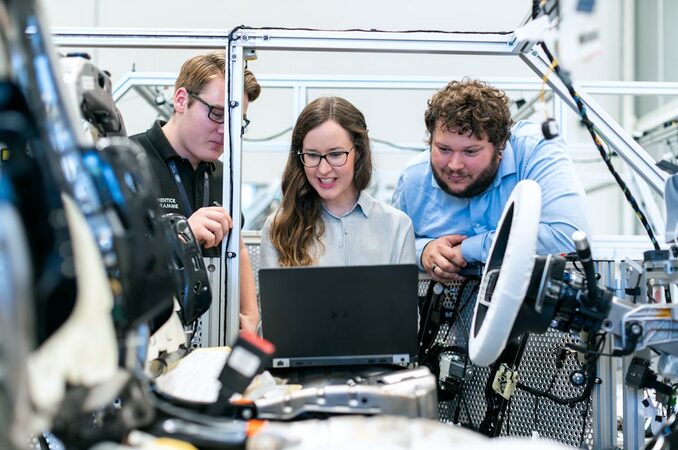
Modern vehicles are no longer purely mechanical machines. For decades, cars relied mainly on physical components such as engines, gears, and hydraulic systems. While these parts still play an important role, software now controls many essential functions. Advances in computing technology have changed how vehicles operate. Electronic systems monitor performance, adjust driving conditions, and support safety features. Many of these tasks happen automatically through onboard software programs. This shift has transformed the automotive industry. Engineers now combine traditional mechanical design with complex digital systems. As a result, vehicles have become more efficient, responsive, and intelligent.
The Rise of Electronic Control Systems
Electronic control units are at the center of modern automotive software. These small computers manage different systems throughout the vehicle. A single car may contain dozens of them. Each control unit focuses on a specific function. One may regulate engine performance, while another handles braking or steering assistance. These systems communicate with each other through internal networks. Sensors provide real-time information about speed, temperature, pressure, and other conditions. The control units analyze this data and make adjustments within milliseconds. For example, software can regulate fuel injection to improve efficiency. It can also adjust engine timing to reduce emissions.
Advanced Safety and Driver Assistance
Safety technology has advanced significantly in modern vehicles. Many safety features depend heavily on software systems. Driver assistance technologies rely on cameras, radar, and sensors. These devices collect environmental data around the vehicle. Software then processes this information to support safe driving decisions. Systems such as automatic emergency braking analyze the distance between vehicles. If a collision risk is detected, the system can apply the brakes quickly. Lane-keeping assistance works in a similar way. Cameras monitor road markings, and software gently adjusts steering to help maintain lane position. These systems react faster than human reflexes in many situations. By continuously monitoring the driving environment, software helps reduce the likelihood of accidents.
Engine Efficiency and Environmental Control
Software also plays a key role in improving fuel efficiency and reducing emissions. Modern engines depend on digital management systems that monitor combustion and fuel delivery. Sensors track variables such as oxygen levels, air intake, and engine temperature. The software analyzes this data and adjusts engine operation accordingly. This level of control was difficult to achieve with purely mechanical systems. Software can make rapid adjustments to maintain efficient combustion under different driving conditions. Environmental regulations have encouraged this technological shift. Automakers use software to ensure vehicles meet strict emissions standards. These digital systems help maintain engine performance while reducing environmental impact. The combination of mechanical engineering and software design creates more efficient vehicles overall.
Connectivity and Vehicle Communication
Modern vehicles are increasingly connected to digital networks. Software allows cars to communicate with smartphones, navigation systems, and cloud services. Infotainment systems rely heavily on software platforms. Drivers can access navigation, music streaming, and communication tools directly through the vehicle interface. Some vehicles also receive over-the-air software updates. These updates improve system performance or add new features without requiring a visit to a service center. Connectivity extends beyond entertainment. Navigation systems use real-time traffic data to suggest efficient routes. Software integration creates a driving experience that is more interactive and responsive. The vehicle becomes part of a broader digital ecosystem.
Software in Electric and Hybrid Vehicles
Electric and hybrid vehicles depend heavily on software for power management. Unlike traditional engines, electric powertrains require precise control of battery systems and energy flow. Software regulates battery charging, temperature control, and power distribution between components. These systems help maintain battery efficiency and extend driving range. Regenerative braking provides another example. When the vehicle slows down, the software directs the electric motor to convert kinetic energy back into stored battery power. Managing these processes requires constant monitoring and adjustment. Digital systems allow electric vehicles to operate smoothly while maximizing energy use.
The Future of Automotive Technology
The automotive industry continues to evolve as software capabilities expand. Vehicles are becoming increasingly intelligent through advanced computing systems. Autonomous driving research relies heavily on software development. Artificial intelligence programs analyze sensor data and make real-time driving decisions. While full self-driving vehicles are still under development, many modern cars already include partial automation features. Adaptive cruise control and automated parking are examples. Manufacturers are investing heavily in digital engineering. Software development teams now work alongside mechanical engineers during vehicle design. This collaboration helps ensure that both physical components and digital systems function together effectively. As vehicles become more connected and automated, software will remain a critical part of transportation technology.
Modern vehicles depend more on software than ever before. While mechanical systems still form the foundation of automotive design, digital technology now controls many essential functions. Electronic control units manage engine performance, safety features, and energy efficiency. Sensors and onboard computers allow vehicles to respond quickly to changing conditions. Software also supports connectivity, driver assistance, and electric vehicle performance. These capabilities have transformed how cars operate and how drivers interact with them. The integration of software and mechanics represents a significant shift in automotive engineering. As technology continues to advance, software will play an even greater role in shaping the future of transportation.
Ants may be tiny, but when it comes to intelligence, they’re giants of the insect world. Their ability to work collectively, solve complex problems, and adapt to their environment has fascinated scientists for years. So, how intelligent are ants? Now, it’s not just biologists paying attention—car engineers and designers are increasingly studying ants for insights into efficiency, navigation, and adaptive design. What makes ants so smart, and why is the auto industry looking to them for innovation?
The Collective Genius of Ant Colonies
Individually, an ant might not seem impressive. But as a group, ants display remarkable intelligence. Colonies operate with complex social structures and assign roles—from foragers to soldiers—based on need, not hierarchy. They communicate using pheromones to coordinate movements, respond to threats, and explore new territory. This decentralized system means that even if one part of the colony fails, the rest can adapt and continue to function. This type of “swarm intelligence” has caught the eye of engineers working on autonomous systems. Instead of relying on one central command system, a vehicle or fleet could be programmed to adapt and respond like an ant colony—quickly and efficiently.
Navigation and Efficiency
Ants are masters of navigation, using a combination of scent trails, environmental cues, and internal “step counters” to find their way. Some desert ant species can travel long distances across featureless terrain and still return to their nest with pinpoint accuracy. These incredible abilities are now being studied for self-driving cars and drone navigation systems. For example, just as ants optimize their routes over time, autonomous vehicles could learn and improve route planning by mimicking ant algorithms. The idea is to create cars that not only move independently but also work together to reduce traffic congestion and increase fuel efficiency—much like how ants find the shortest paths to food sources.
Damage Control and Resilience
Ant colonies are built to survive. When obstacles arise, ants reroute, rebuild, or shift their strategy without chaos or breakdown. In the automotive world, this resilience is inspiring new approaches to vehicle safety and fault-tolerant design. Imagine a car that can detect a malfunction and reroute power or adjust its operation to avoid danger—similar to how ants adapt to a blocked trail.
Design Inspired by Nature
Beyond behavior, ants are influencing physical design too. Engineers are exploring lightweight, flexible vehicle structures based on the segmentation of an ant’s body. These designs could improve shock absorption, aerodynamics, and energy use. Bio-inspired materials and architecture are paving the way for smarter, more efficient vehicles.
Ants may be small, but their complex behaviors and problem-solving skills are opening big doors in automotive innovation. From swarm intelligence to adaptive navigation and resilient design, these insects are helping engineers rethink how vehicles move, think, and respond. As nature continues to inspire technology, it’s clear that looking down—at the world of ants—might just be the next step forward in smart mobility.


 This is one of the best things you need to do before you go out to look for your car seat covers. Since these seat covers are made of different sizes, you need to measure your seats to know the exact type and even size of car seat cover to purchase. If you are planning to visit a retail shop, you will realize that most seats are small even though they have the measurement on the packaging.
 After you have decided on the style of the seat covers to purchase, you are also required to ensure that the color you choose will match the interior of your vehicle. If you find the best color that matches your likes, then you can go ahead and commence installing your leather seat covers.


 As what mentioned above there is no way for you to know when you will encounter problems while you are on the road. It will be frustrating to call a towing company in the middle of the night only to find out that they could not help you because their office is still close. For this reason, you should always choose a service provider that offers emergency services.